

It is the most fiercely debated itinerary dilemma for anyone planning a journey to North Africa: "Marrakech vs Fes which city is better?" Scour any travel forum or Reddit thread, and you will find passionate champions on both sides. Both are celebrated UNESCO World Heritage cities, both have served as dynastic imperial capitals, yet they feel as different as modern Paris and medieval Florence.
Should you dive headfirst into the pulsating, terracotta energy of Marrakech, or lose yourself in the labyrinthine, untouched medieval alleyways of Fes? Is it realistic to visit both on a single holiday? (Yes—via our curated Morocco 7-day itinerary or comprehensive 10-day circuit). In this authoritative 2026 guide, we compare both cities across every practical dimension: medinas, food, lodging prices, safety, day excursions, and travel logistics between them.
At a Glance: Marrakech vs Fes Comparison Matrix
Here is how Morocco's two imperial heavyweights compare head-to-head across core travel categories:
| Category | Marrakech (The Red City) | Fes (The Spiritual Heart) |
|---|---|---|
| Atmosphere & Vibe | Vibrant, sensory, cosmopolitan, high-energy nightlife | Scholarly, mystical, medieval, unhurried and solemn |
| Medina Architecture | Wider souk arteries, manicured riads, heavier motorbike traffic | 9,000+ alleys, 100% car-free, donkeys, untouched 9th-century layout |
| Average Boutique Riad | $140 – $450 / night (luxury boutique standard) | $75 – $220 / night (30%–40% better value) |
| Culinary Experience | World-class fusion dining, sunset cocktail lounges, Tanjia | Centuries-old slow culinary art, authentic Pastilla, secret bakeries |
| Artisan Specialization | Brass lanterns, leather poufs, modern designer textiles | Chouara leather vats, blue Fassi cobalt ceramics, carved cedar |
| Top Excursions | High Atlas (Toubkal), Agafay Desert, Essaouira coast | Chefchaouen (Blue City), Volubilis Roman ruins, Meknes |
| Best Suited For | Couples, design enthusiasts, first-time travelers, weekenders | History buffs, photographers, cultural purists, budget luxury |
1. The Vibe: Cosmopolitan Glamour vs. Living Medieval History
Marrakech: The Seductive Red City
Marrakech has captivated international artists, fashion designers, and travelers since Yves Saint Laurent fell under its spell in the 1960s. Built with sun-baked pink clay, the city is manicured for global travelers. It offers a sophisticated hybrid of traditional Moroccan architecture and contemporary luxury.
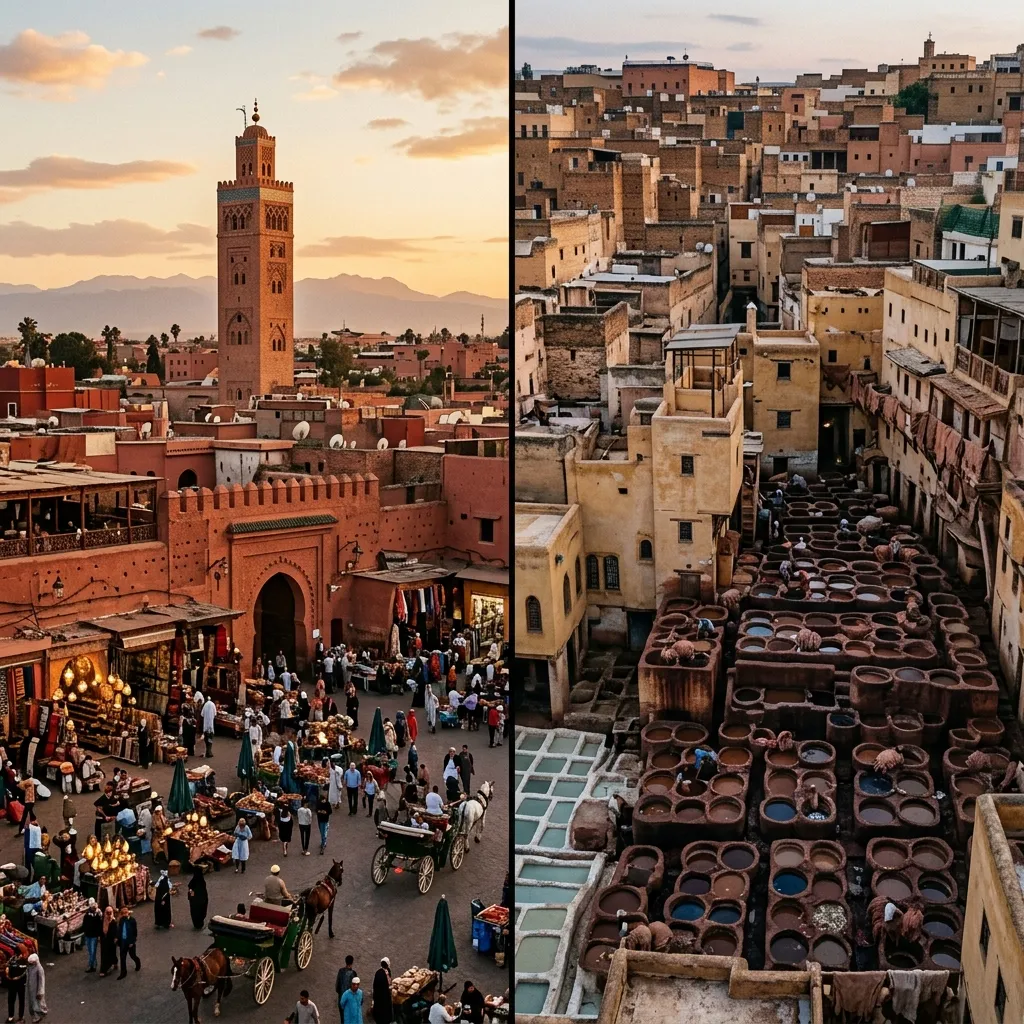
At twilight, the legendary square of Jemaa el-Fnaa transforms into an open-air spectacle of smoking grill stalls, Berber musicians, acrobats, and henna artists. Steps away, glamorous rooftop cocktail bars look out over the illuminated minaret of the 12th-century Koutoubia Mosque. If your ideal Moroccan holiday includes lounging by an emerald plunge pool with chilled local wine before dining on French-Moroccan fusion cuisine, Marrakech is in a class of its own.
Fes: The Timeless Medieval Sanctuary
Step past the iconic blue-and-green glazed ceramic tiles of Bab Bou Jeloud into Fes el-Bali, and modern centuries peel away. Fes is the oldest of Morocco's four imperial capitals (founded in 789 AD) and remains the nation's spiritual, intellectual, and religious soul.
Fes does not stage itself for tourists. It is a genuine, functioning medieval metropolis. You will not find cocktail bars or trendy neon signs inside the ancient walls; instead, you will hear the melodic calls to prayer echoing across 300 mosques, the clatter of copper beaters in Place Seffarine, and the calls of muleteers shouting "Balak! Balak!" (make way!) as donkeys squeeze through footpaths too tight for any motorized vehicle.
2. Battle of the Medinas: Curated Souks vs. The 9,000-Alley Labyrinth
The medinas are the main event of both cities. Both are recognized as UNESCO World Heritage landmarks, but navigating them requires completely different mentalities.

- Marrakech Medina: The souks branching north from Jemaa el-Fnaa (such as Souk Semmarine and Rahba Kedima) are vibrant, dazzling, and relatively easy to navigate. Smartphone GPS generally functions in the broader thoroughfares. However, narrow pedestrian lanes are frequently shared with motorized scooters buzzing past pedestrians, which requires constant vigilance. Key historic sites include the meticulously restored Ben Youssef Madrasa and the palatial courtyards of Bahia Palace.
- Fes el-Bali: With more than 9,000 intertwined alleys, Fes el-Bali is the largest car-free contiguous urban space on earth. Motorbikes are completely prohibited. Satellite GPS signals cannot penetrate the covered cedar awnings and stone corridors. Getting lost is not a risk—it is a guarantee. The visual payoff is extraordinary: the 11th-century Chouara Tannery, where animal hides are still soaked in natural stone vats of pigeon droppings, indigo, and saffron, and the 9th-century University of Al Quaraouiyine (the world's oldest continually operating university).
Pro-Tip on Shopping: If you are purchasing fine leather jackets or hand-painted cobalt pottery, buy them in Fes where master guilds produce them on-site. If you want decorative brass lanterns, contemporary Berber rugs, or bohemian home décor, Marrakech offers wider contemporary curation. For negotiation strategies, consult our guide on Souk Bargaining Etiquette in Morocco.
3. Cost & Value: Is Fes Truly Cheaper Than Marrakech?
The financial difference between the two imperial cities is substantial. Because Marrakech serves as the primary international gateway for European weekenders and luxury tourism, prices across hotels, dining, and private guiding carry a noticeable premium.
- Lodging & Riads: A top-tier luxury riad with an internal courtyard pool in Fes (such as Riad Fes or Palais Amani) typically ranges between $120 and $220 USD per night. In Marrakech, an equivalent historic boutique riad easily commands $280 to $550+ USD per night during peak autumn and spring seasons.
- Dining: A multi-course dinner at a premier rooftop restaurant in Marrakech (such as Nomad or Le Jardin) costs approximately $35 to $60 USD per person. In Fes, an equally exquisite traditional feast in an opulent riad dining room costs $18 to $30 USD per person.
- Private Chauffeurs & Transfers: When arranging private intercity transfers or multi-day expeditions, rates remain standardized nationwide. Review our complete breakdown of Morocco private driver costs or calculate realistic daily budgets using our interactive Morocco Trip Cost Calculator.
Calculate realistic riad, private chauffeur, and meal expenses across Marrakech and Fes.
4. Food & Culinary Heritage: Modern Rooftops vs. Ancestral Feasts
Both cities are culinary capitals of the Arab-Berber world, but their gastronomic strengths reflect their personalities.
Marrakech is celebrated for street food theatre and culinary reinvention. The city's signature specialty is Tanjia Marrakchia—tender beef or lamb seasoned with cumin, garlic, and preserved lemon, sealed inside a clay urn and slow-cooked for eight hours in the ash beneath the neighborhood hammam. Marrakech is also home to Morocco's finest international rooftop dining scene, where you can pair Moroccan wines with inventive takes on couscous and pastilla overlooking the minarets.
Fes is the historic culinary capital of the kingdom. Fassi cuisine is the most complex and refined in Moroccan history, having absorbed Moorish, Andalusian, Ottoman, and Jewish traditions over a millennium. Fes is the birthplace of authentic Pastilla (a paper-thin warka pastry stuffed with pigeon or shredded chicken, slow-cooked almonds, cinnamon, and powdered sugar). Local bakeries and communal ovens produce the most exquisite semolina breads and honey-drenched almond pastries in the country.
5. Day Trips: Which City is the Better Base Camp?
If your travel style prefers establishing a home base in one boutique riad and taking daily excursions without repacking your luggage every morning, geography gives each city distinct regional advantages.
Marrakech is the ultimate hub for dramatic ecological variety:
- High Atlas Mountains & Imlil: 90 minutes south, you transition from palm oases to 4,000-meter snow-capped alpine peaks on our Active Atlas & Toubkal trek.
- Agafay Desert: Just 45 minutes from town, you can experience sunset camel rides and luxury glamping across stark stone dunes without traveling to the Sahara.
- Essaouira Coast: A 2.5-hour drive west brings you to the breezy Atlantic port town famous for fresh seafood and Portuguese ramparts.
- Ait Benhaddou: Cross the dramatic Tizi n'Tichka pass to explore cinematic mudbrick kasbahs on our Heritage Cinema & Kasbah tour.
Fes is the superior hub for Roman antiquity and northern mountain culture:
- Volubilis & Moulay Idriss: 1 hour west sit the best-preserved UNESCO Roman ruins in North Africa, complete with intact mosaic floors.
- Meknes: The 17th-century imperial city of Sultan Moulay Ismail with the monumental Bab Mansour gate.
- Chefchaouen (The Blue City): A 3.5-hour drive through the Rif Mountains delivers you to the world-famous blue-washed mountain medina.
6. How to Travel Between Marrakech and Fes (And Why the Desert is King)
Many travelers believe they must choose one or the other. In reality, connecting both imperial cities creates Morocco's most iconic vacation route. You have three transit options:
- The ONCF Train (Fastest Budget Transit): A direct rail line connects Marrakech and Fes via Casablanca. The train takes roughly 6.5 hours in air-conditioned comfort, with tickets costing roughly $25–$35 USD for First Class. However, the route travels through flat agricultural plains, bypassing the Sahara and High Atlas entirely.
- Domestic Flights: Royal Air Maroc offers flights between Marrakech (RAK) and Fes (FEZ), but they almost always require a layover in Casablanca, stretching total travel time to 3.5–5 hours once security and transfers are factored in.
- The Definitive 3-to-4 Day Desert Overland Crossing: Instead of wasting a day in transit, hire a licensed private driver in Morocco. Depart Marrakech, ascend over the High Atlas via the Tizi n'Tichka pass, explore Ait Benhaddou, spend two nights in an Erg Chebbi luxury desert camp, and travel north through the dramatic Ziz Valley gorge and Middle Atlas cedar forests into Fes.
This exact point-to-point crossing is fully mapped with daily drive times and boutique riad selections in our published Morocco 7-day itinerary guide.
Experience Both Marrakech & Fes in Complete Comfort
Skip the crowded 7-hour train ride. Cross the High Atlas Mountains and spend the night glamping among the 150-meter orange dunes of Erg Chebbi with your own dedicated English-speaking Morocco private chauffeur and premium 4×4 Prado.
7. The Final Verdict: Which City Wins Your Itinerary?
If your schedule strictly limits you to choosing only one imperial city, match your travel persona to the verdict below:
- Pick Marrakech if: You are visiting Morocco for the first time, you love rooftop cocktails and boutique dining, you want easy day trips to the High Atlas or Atlantic coast, you value accessible navigation, or you are traveling on a shorter 4-to-5 day getaway.
- Pick Fes if: You are an architectural purist, photographer, or history enthusiast who craves an authentic, unvarnished look into the Arab-Berber medieval world, you want to experience the world's greatest living car-free medina, and you prefer your budget to stretch 30% further.
Frequently Asked Questions: Marrakech vs Fes
Is Fes or Marrakech better for first-time visitors?
Marrakech is widely considered the smoother entry point for first-time visitors. The streets are wider, high-end tourism infrastructure is expansive, English is widely spoken in riads, and international flight routes into Marrakech Menara Airport (RAK) are plentiful. Fes is more intense and deeply medieval, making it rewarding for travelers who are comfortable navigating complex historical environments.
Is Fes cheaper than Marrakech?
Yes. Fes is approximately 30% to 40% more affordable than Marrakech across riad accommodations, local dining, and artisanal handicrafts. A palatial historic riad in Fes typically costs between $80 and $200 per night, whereas a luxury boutique equivalent in Marrakech commands $180 to $450+.
How many days do you need in Marrakech vs Fes?
We recommend 3 to 4 days for Marrakech to cover the medina souks, major palaces, gardens, and an excursion into the High Atlas Mountains. For Fes, 2 to 3 days provides ample time to immerse yourself in Fes el-Bali, visit the Chouara Tannery, and take a half-day trip to the Roman ruins of Volubilis.
How do you travel from Marrakech to Fes?
The direct ONCF train connects them in about 6.5 hours for $25–$35 USD. However, travelers who want to see Morocco's landscapes hire a private driver to make a 3-day or 4-day desert road trip crossing the High Atlas Mountains, Dades Valley, and Erg Chebbi dunes before arriving in Fes.
Which medina is safer: Fes or Marrakech?
Both medinas are safe from violent crime due to strict Moroccan tourist police patrols. In Fes, the main challenge is getting disoriented in the 9,000 alleys and dealing with persistent faux guides near the tanneries. In Marrakech, the challenge is navigating reckless motorbikes in narrow lanes and persistent souk bargaining. In both cities, booking an official licensed guide for your first morning eliminates 95% of tout friction.
Can you visit both Marrakech and Fes in one week?
Absolutely. By booking an open-jaw flight (arrive in Marrakech RAK, depart from Fes FEZ or Casablanca CMN), you can spend 2 nights in Marrakech, 2 nights driving across the Atlas and Sahara, and 2 nights in Fes without backtracking.