

Spending a night under the stars in the Sahara Desert is the highlight of most Moroccan trips. Yet travelers often arrive with two very different expectations. Some picture freezing in a damp nylon tent and stumbling across dark dunes to share a communal outhouse. Others expect a five-star hotel room miraculously dropped into a sand dune.
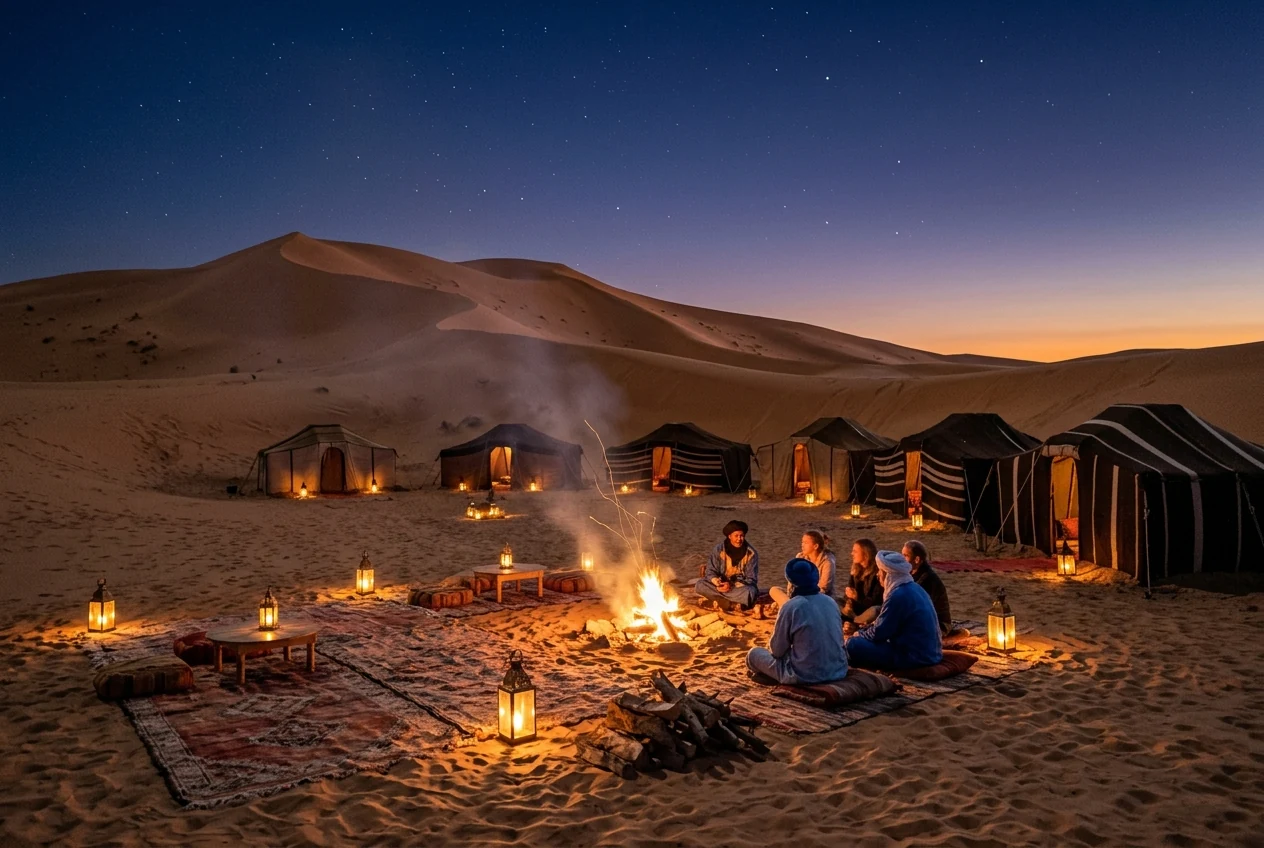
The reality of modern Moroccan glamping sits somewhere in between. Over the past decade, high-end camp operators in Erg Chebbi (the towering orange dunes outside Merzouga) have solved the logistics of desert comfort. Today, you can sleep in a hand-crafted Berber tent with a king-sized mattress, plug your phone into a 220V wall outlet, take a steaming shower, and enjoy a slow-roasted tagine while local musicians play around a tamarisk wood fire.
However, the word "luxury" is used loosely in Moroccan travel listings. Here is our honest, on-the-ground breakdown of what separates an authentic desert oasis from an overcrowded tourist bivouac.
Estimate private 4x4 transfers, luxury camp stays, and High Atlas driver rates.
The Anatomy of a True Luxury Tent

If you are paying for luxury glamping, you should not be "roughing it." Here are the exact architectural and amenity standards you should expect:
- Private En-Suite Bathroom: The tent interior is divided by an insulated partition wall. Behind it sits a private washroom equipped with a modern ceramic flush toilet, a stone vanity basin with running tap water, and a separate walk-in shower stall with reliable hot water.
- Solid Raised Flooring: Cheaper camps lay carpets directly on loose sand, which means every step kicks up fine dust into your bedsheets. True luxury camps build wood or composite decking platforms under every tent, covered with authentic Beni Ourain and Boucherouite wool rugs.
- Heavy-Duty Weather Canvas: Authentic desert tents are constructed with multi-layered canvas lined with dense camel-hair or sheep-wool felt. This insulation keeps the tent cooler during blazing afternoon sun and retains heat during chilly desert nights.
- Solar Electricity (220V Outlets): You will have real reading lamps, ceiling illumination, and standard Moroccan two-pin electrical outlets to charge cameras, phones, and drone batteries without relying on noisy combustion engines.
- Quality Bedding: Expect proper hotel-grade mattresses with high-thread-count Egyptian cotton sheets, fluffy pillows, and heavy wool blankets.
Deep Dunes vs. Roadside Camps: The Location Trap
This is the single biggest trap in Merzouga tourism. Online booking platforms show identical photos of sand dunes, but they rarely disclose where the camp is actually situated.
Perimeter (Roadside) Camps: Dozens of low-cost camps sit only 200 to 400 meters from the paved N13 highway. While they have sand behind them, you will hear truck traffic throughout the night, see headlights sweeping across your tent canvas, and smell exhaust from rental quad bikes tearing across the flats.
Deep Dune Camps: Legitimate luxury camps are nestled deep inside the Erg Chebbi dune sea, often a 20 to 30-minute 4x4 drive off-road from the nearest village (Hassilabied or Merzouga). High 150-meter sand walls surround the camp on all sides, blocking artificial light and road noise entirely. When you step outside your tent at midnight, you experience absolute silence and a Bortle Class 1 dark sky with the Milky Way visible to the naked eye.
Camp Categories Compared: Basic vs. Standard vs. Royal Luxury
| Feature | Budget Bivouac | Standard Camp | Royal Luxury Glamping |
|---|---|---|---|
| Average Rate / Night | $40 – $70 (per person) | $100 – $160 (per tent) | $220 – $450 (per tent) |
| Bathroom Facilities | Shared outdoor pit / cold bucket | Shared block with warm showers | Private en-suite, hot rainfall shower, flush toilet |
| Power & Lighting | Candles or faint 12V bulb | Central charging tent only | 24/7 in-tent solar 220V outlets & lamps |
| Location in Dunes | Perimeter flats near asphalt | Outer dune edge | Deep dunes, zero light pollution |
| Dinner Experience | Basic group vegetable tagine | Buffet dinner in main tent | Plated 3-course dinner, wine glassware, campfire show |
| Luggage Transfer | Carried on camel saddle | Shared truck transport | Dedicated private 4x4 luggage transfer |
A Typical Evening at Camp: What to Expect

Your desert experience usually begins around 4:30 PM. After a scenic journey through the Atlas Mountains with your private driver, you arrive at a base riad in Merzouga to freshen up and leave heavy suitcases.
From here, you mount your camel for a peaceful trek into Erg Chebbi. As the sun sinks below the horizon, the sand changes from bright mustard yellow to deep rust red. You arrive at camp just as the dusk lanterns are lit along the sand paths.
After settling into your tent, dinner is served in a decorated restaurant tent. A traditional luxury desert meal includes:
- Warm bowls of spiced Moroccan harira soup with dates and sweet chebakia pastries.
- Fresh Moroccan salads with diced tomatoes, cucumbers, roasted peppers, and cumin.
- Slow-cooked beef or lamb tagine with caramelised prunes, toasted almonds, and sesame seeds, served with freshly baked khobz bread.
- Dessert of fresh seasonal melons or orange slices dusted with cinnamon.
After dinner, guests gather around a central tamarisk campfire. Camp staff, who are native Amazigh men from the surrounding valley, play traditional hand drums (derboukas) and sing desert nomadic songs. Many guests lay blankets on the sand dunes away from the fire to gaze at the stars before retiring to their heated tents.
Seasonal Realities: Weather, Freezes & Furnace Heat
The Sahara Desert has an extreme climate. Understanding the seasons is critical before booking:
- Spring (March to May): The most popular season. Daytime temperatures average 25°C to 30°C (77°F to 86°F), and evenings are comfortably mild (14°C to 18°C). Occasional spring dust storms can occur, making a cotton cheche (turban) essential.
- Autumn (September to November): Excellent travel window. Warm days and comfortable nights with very low wind. The date harvest in the nearby Tafilalet oasis is in full swing.
- Winter (December to February): Clear blue skies during the day with temperatures around 18°C to 20°C (65°F to 68°F). However, nighttime temperatures drop rapidly once the sun sets, frequently reaching 2°C to 5°C (35°F to 41°F). If you travel in winter, a camp with electric heaters and thick blankets is mandatory.
- Summer (July and August): Extreme heat. Daytime temperatures regularly exceed 42°C to 46°C (108°F to 115°F). We advise travelers to avoid desert camping during these two months, opting instead for mountain trekking in the High Atlas or coastal stays in Essaouira.
For a month-by-month temperature breakdown, check our guide on the best time to visit the Sahara.
What to Pack for an Overnight in Erg Chebbi
Keep your packing for the camp contained in one small backpack or weekend duffel. Your main hard-shell suitcases remain secured in your private driver's vehicle or at the staging riad.
- Cotton Tuareg Cheche (Turban): A 4-meter cotton scarf wrapped around your head and face protects your eyes, nose, and mouth from windblown sand far better than any baseball cap. Your driver or camel guide can help you tie it properly.
- Sunglasses with UV400 Protection: The glare from white-gold sand under desert sun is intense. Wrap-around sunglasses prevent sand from blowing in behind the lenses.
- Warm Evening Layer: Even during warm months, desert breezes feel brisk after dark. Pack a fleece, wool pullover, or light down jacket.
- Slip-on Footwear: Running shoes fill with sand within minutes. Bring slip-on sandals or canvas shoes that you can easily shake out before stepping into your tent.
- Eye Drops & Moisturizer: Sahara air is exceptionally dry. Saline eye drops and lip balm prevent irritation after hours in the wind.
Connecting Merzouga to Your Morocco Itinerary
Merzouga is located in southeastern Morocco, roughly 560 kilometers from Marrakech and 460 kilometers from Fes. Because the drive crosses mountain ranges, you should never attempt to drive directly from Marrakech to the Sahara in a single day.
The most enjoyable way to experience the desert is as part of a multi-day point-to-point journey. Our 7-day Morocco itinerary breaks the crossing with an overnight stay in the dramatic Dades Gorge, allowing you to visit UNESCO Ait Benhaddou and Todra Gorge along the way. If you have more time, our 10-day Grand Circuit adds the imperial history of Rabat and Casablanca.
Experience the Real Sahara with Local Amazigh Curators
Leave the logistics to us. Roam Morocco organizes your private 4x4 transport from Marrakech or Fes with a dedicated English-speaking chauffeur, hand-selected luxury dune camp in Erg Chebbi, sunset camel treks, and tailored cultural stops.
Frequently Asked Questions
Can children and seniors visit a luxury desert camp?
Yes. Because our luxury camps offer 4x4 dune transfers directly to the tent entrance, guests who prefer not to ride camels can easily arrive in comfort. Private bathrooms and real beds make the experience suitable for multi-generational families and travelers of all ages.
Is there mobile phone reception and Wi-Fi in the dunes?
Most top camps have 4G cellular coverage via Maroc Telecom, and several feature satellite Wi-Fi in the main dining tent. However, signals can fluctuate depending on dune topography and wind conditions. We encourage travelers to embrace the remote environment and disconnect for the night.
Can I take a private 4x4 instead of riding a camel?
Yes. Every guest has the choice between a camel caravan trek across the dune ridges or a direct private 4x4 transfer across the sand tracks. If you have mobility concerns or simply prefer vehicles, your chauffeur will drive you straight to camp.