⚡ The 60-Second Verdict: Merzouga vs Zagora
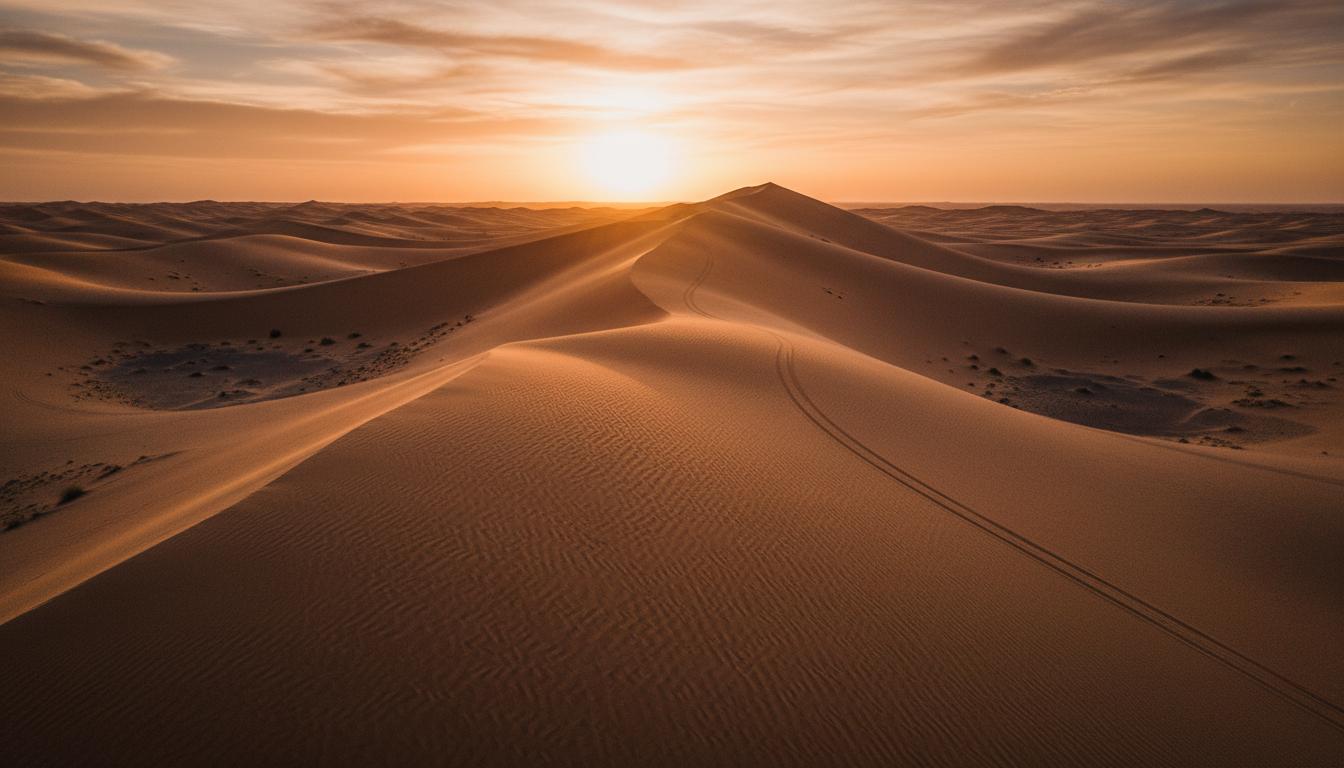
If you want the iconic, towering golden-orange sand dunes of National Geographic fame, you MUST visit Merzouga (Erg Chebbi) or Erg Chigaga. Erg Chebbi features dunes rising up to 150 meters (500 feet), silent rolling horizons, camel treks across deep sand ridges, and world-class luxury glamping camps with private en-suite rainfall showers. Reaching Merzouga requires a minimum 3-day / 2-night circuit from Marrakech (or onwards to Fes).
Zagora is NOT a sand dune desert. Zagora is a flat, stony desert plain (known in Arabic as a reg) with scrub brush, power lines, and tiny dust mounds rarely exceeding 5 meters. Rushed 2-day / 1-night tours to Zagora require 16 hours of grueling driving in two days for an underwhelming gravel experience. Unless you are strictly limited to 48 hours and simply want a quick night away from Marrakech, skip Zagora entirely.
Few travel fantasies compare to crossing the Moroccan Sahara: watching the Atlantic Atlas Mountains dissolve into arid pre-Saharan plateaus, riding a dromedary camel across cresting apricot dunes at sunset, sipping sweet mint tea by an acacia wood fire, and falling asleep under one of the darkest, star-drenched skies on Earth.
Yet, more travelers leave Morocco disappointed by their "desert excursion" than by almost any other experience in the Kingdom. Why? Because the term "Sahara Desert Tour" is used indiscriminately by high-street Marrakech kiosks and discount booking platforms to describe two completely radically different landscapes: the gravel flatlands of Zagora and the monumental sand seas of Erg Chebbi (Merzouga) and Erg Chigaga (M'hamid).
“I was born in a nomad tent four kilometers from the Algerian border, where Erg Chebbi’s orange sand walls swallow the horizon. Every week in Marrakech, I meet international travelers holding a printed ticket for a 2-day minibus tour to Zagora. A street seller told them it was the Sahara. They spend sixteen hours choking on diesel exhaust in mountain traffic, arrive at a stony roadside dirt lot with four bored camels tied to a fence, eat lukewarm canned chicken, and fly home believing the Sahara is a dreary gravel pit. The Sahara is not a backdrop for twenty-second video reels. It is an ancient, living ocean that either resets your nervous system or exhausts you completely. Zagora exists for tour bus profit margins. Erg Chebbi exists because the wind carved a cathedral of sand that asks for three unhurried days of your life—and gives you back something you didn’t know you were missing.”
As local expedition curators at Roam Morocco, we believe travel planning requires total transparency. In this comprehensive guide, we dissect the geography, road conditions, driving logistics, luxury camp amenities, seasonal weather swings, and realistic budgets so you can execute the flawless desert expedition your bucket list deserves.
1. The Geography of Moroccan Deserts: Ergs vs. Regs
To understand why so many tourists feel misled, you must first understand the two primary geomorphological landscapes that comprise the Sahara:
- The Erg (Sand Sea): This is the Sahara of your dreams. An erg is a broad, flat area of desert covered with wind-swept sand and monumental dunes that shift continuously in the breeze. In Morocco, there are only two genuine ergs reachable by travelers: Erg Chebbi (adjacent to the desert outpost of Merzouga) and Erg Chigaga (south of M'hamid El Ghizlane near the Algerian border).
- The Reg (Stone Desert / Hamada): Covering roughly 70% of the true Sahara, a reg is an arid plateau strewn with dark gravel, fractured rock, and sun-baked shale. While ruggedly atmospheric, it features no towering dunes. Zagora is situated in a reg landscape.
When discount operators sell an "All-Inclusive 2-Day Desert Tour" for €80 from Jemaa el-Fnaa, they are taking you to Zagora. You will ride a camel for 45 minutes across rocky dirt towards a dozen roadside tents within earshot of passing trucks. If your heart is set on rolling orange sand dunes, understanding this distinction is everything.
2. Side-by-Side Comparison: Merzouga vs. Zagora vs. Erg Chigaga
Here is how Morocco's three main desert destinations stack up across essential traveler metrics:
| Evaluation Factor | Merzouga (Erg Chebbi) | Zagora (Draa Valley) | Erg Chigaga (Wild Desert) |
|---|---|---|---|
| Type of Landscape | Massive orange sand dunes (Erg) | Flat stone & gravel desert (Reg) | Remote, wild dune sea (Erg) |
| Dune Height | Up to 150 meters (500+ feet) | 5 to 10 meters (small scrub mounds) | Up to 300 meters (1,000 feet) |
| Distance from Marrakech | 560 km (~9 to 10 hours driving) | 360 km (~6.5 to 7.5 hours driving) | 510 km (~9h road + 2h off-road 4x4) |
| Recommended Duration | 3 Days / 2 Nights minimum (4 days ideal) | 2 Days / 1 Night (extremely rushed) | 4 Days / 3 Nights minimum |
| Road Accessibility | 100% paved tarmac to dune perimeter | 100% paved tarmac | Requires skilled 4x4 off-road sand driving |
| Luxury Camp Quality | World-class 5-star camps (flush toilets, A/C, showers) | Basic, simple tents; very limited true luxury | High-end nomadic luxury bivouacs |
| Can Route to Fes? | Yes! Natural through-route (Marrakech → Fes) | No. Must backtrack 100% to Marrakech | No. Must return westward via Ouarzazate |
| Crowd Levels | Moderate to high around village; quiet in private dunes | Very crowded, mass-tourist budget groups | Minimal; pristine isolation and solitude |
| Best Suited For | First-time visitors, families, luxury seekers, photogs | Travelers with strictly 48 hours total | Adventurers, off-road enthusiasts, solitude seekers |
3. The Gold Standard Itinerary: The 3-Day Marrakech to Merzouga Circuit
The classic 3-Day / 2-Night private desert circuit is widely recognized as the single finest overland travel journey in North Africa. Because the distance between Marrakech and Merzouga is approximately 560 kilometers over the Atlas mountain range, breaking the journey into deliberate cultural segments is essential.
Day 1: Marrakech → Tizi n'Tichka → Ait Benhaddou → Dades Valley
Distance: 315 km • Driving Time: ~6.5 hoursDepart your Marrakech riad at 08:00 in an air-conditioned Toyota Land Cruiser Prado 4x4. Within 45 minutes, the fertile Haouz plains yield to the jagged foothills of the High Atlas.
- Tizi n'Tichka Pass (2,260m): Scale Morocco's highest paved mountain pass via dramatic switchbacks, pausing at panoramic crests overlooking Berber stone villages clinging to sheer terraced ravines.
- Ksar of Ait Benhaddou (UNESCO): Cross the Ounila river valley to explore the 11th-century earthen clay fortress where Gladiator, Game of Thrones, and Lawrence of Arabia were filmed. (If you want an itinerary focused entirely on historic kasbahs and movie sets, explore our dedicated Morocco film location & Heritage cinema tour). Hire a licensed local kasbah guide to uncover the ancient trans-Saharan caravan gold trade routes.
- Ouarzazate & Valley of the Roses: Pass through the "Hollywood of Morocco" and the fragrant Skoura palm oasis before climbing into the dramatic red limestone canyons of the Dades Valley.
- Overnight: Stay at a luxury boutique kasbah hotel (such as Chez Pierre or Hotel Xaluca Dades) perched high along the gorge cliffs, enjoying a 4-course French-Moroccan dinner with panoramic terrace views.
Day 2: Dades Valley → Todra Gorge → Erfoud → Erg Chebbi Dunes
Distance: 260 km • Driving Time: ~4.5 hoursFollowing a leisurely breakfast of fresh orange juice, warm khobz flatbread, and amlou (almond-argan spread), continue eastward into the pre-Saharan desert gateway.
- Todra Gorge (Gorges du Todgha): Stroll beneath vertical 300-meter (1,000-foot) limestone cliff faces carved by the Todra river. Watch rock climbers ascend sheer walls while local Berber shepherds guide flocks along crystal mountain streams.
- Erfoud & The Fossil Quarries: Stop in the world capital of Paleozoic fossils, where 360-million-year-old marble beds containing goniatites and orthoceras are quarried and hand-polished.
- Arrival at Merzouga & The Camel Caravan: Arrive at the edge of the Erg Chebbi dune field by 16:30. Transfer your overnight luggage into 4x4 support vehicles and mount your dromedary camel for a 60-minute trek across shifting sand ridges as the late-afternoon sun paints the dunes in deep saffron, copper, and rose gold.
- The Luxury Camp Experience: Arrive at your secluded royal tent. Enjoy welcome mint tea and dates, try sandboarding down a 100-meter dune ridge, and settle into a private candlelit feast under a blanket of unpolluted desert constellations. Later, gather around an open roaring campfire for traditional Saharan Gnawa drumming and folklore.
Day 3: Erg Chebbi Sunrise → Draa Valley → Marrakech (OR Ziz Valley → Fes)
Distance: 560 km to Marrakech OR 470 km to FesWake before dawn to climb the nearest dune crest. Watching the Saharan sun ignite the Algerian horizon in blinding gold is a spiritual, unforgettable spectacle.
- Option A: Return Circuit to Marrakech: Journey westward via Rissani (the ancient date trading capital and resting place of the Alaouite dynasty founders), traversing the dramatic volcanic terrain of Alnif and the million-palm Draa Valley oasis before recrossing the High Atlas to reach Marrakech by 19:30.
- Option B: The One-Way Traverse to Fes (Recommended): Instead of returning to Marrakech, head north! Travel through the dramatic Ziz Gorge, cross the Middle Atlas mountain range, pause in the cedar forests of Azrou to observe wild Barbary macaque monkeys, visit the alpine architecture of Ifrane ("The Switzerland of Morocco"), and arrive at your riad in medieval Fes by 18:00. This avoids backtracking and connects Morocco's two greatest imperial hubs in a seamless circuit.
Experience Erg Chebbi with Roam Morocco's Private Expeditions
Skip crowded tourist minibuses and chaotic roadside stalls. Our signature 3-Day Premium Explorer Circuit includes private luxury Toyota Prado 4x4 transportation, an expert English-speaking Berber driver, 5-star boutique kasbah suites, and a VIP royal tented camp deep in the golden dunes.
4. Why 2-Day Desert Tours to Zagora Are Almost Always a Mistake
If you search for Sahara tours on budget aggregator platforms or walk into kiosks along Rue Moulay Ismaïl in Marrakech, you will see endless ads reading: "2 Days / 1 Night Desert Tour to Zagora - Only €75!"
Here is the mathematical and physical reality of what that itinerary actually entails:
- 16 Hours of Driving in 36 Hours: Marrakech to Zagora is approximately 360 kilometers each way over the Tizi n'Tichka mountain pass. In a commercial 17-seat Mercedes Sprinter minibus navigating slow truck traffic, the one-way drive takes between 7.5 and 8.5 hours. You spend 8 hours driving on Day 1, sleep for 7 hours, and spend another 8 hours driving back on Day 2.
- No Time for Sightseeing: Because the driver is constantly racing against sunset on Day 1 and darkness on Day 2, stops at Ait Benhaddou and Ouarzazate are reduced to rushed 30-minute photo-snaps where you are herded into high-commission souvenir shops.
- Zero Sand Dunes: You arrive in Zagora at 18:00, exhausted. You are placed on a camel and led across rocky dirt, past power lines and tire tracks, to small dusty hillocks that resemble a construction sandpit far more than the Sahara.
- Severe Traveler Fatigue: Spending 16 hours vibrating in a shared minibus over mountain hairpins leaves you depleted, nauseous, and cheated out of your holiday time.
Our Unfiltered Advice: If you only have 2 days available from Marrakech, do NOT try to see the desert. Instead, take a relaxing 2-day excursion to the coastal ramparts of Essaouira, or book a private mountain retreat to the luxury valleys of the High Atlas & Imlil. Save the Sahara for a trip where you can dedicate at least three full days to reach Merzouga.
5. What Defines a True "Luxury" Desert Camp in 2026?
In recent years, the word "luxury" has been co-opted by virtually every desert camp operator in Merzouga. Camps that were considered "basic" five years ago now add cheap synthetic rugs and market themselves as "VIP Royal Glamping".
To ensure you are booking a genuine 5-star desert sanctuary, look for these six non-negotiable operational features:
Private En-Suite Bathrooms
Ceramic flush toilets, European-standard porcelain sinks, and private hot rainfall showers inside your individual tent. No communal trek through the freezing dark to a shared block.
24/7 Solar Electricity
Silent solar inverter battery arrays providing 220V power inside every tent for charging cameras, phones, and CPAP machines without noisy, smelly diesel generators.
Hotel-Grade Bedding
Real handcrafted wooden king beds with orthopedic mattresses, high-thread-count Egyptian cotton linens, plush goose down duvets, and hand-woven Berber camel-wool blankets.
Multi-Course Gourmet Dining
Full sit-down restaurant-grade dinners in a dedicated dining pavilion: savory chicken pastilla, 7-vegetable couscous, slow-braised beef and prune tagines, and delicate French pastries.
Deep Dune Seclusion
True luxury camps are pitched deep behind the second or third dune ridge of Erg Chebbi, isolated from road lights, village noise, and quad bike exhaust fumes.
Climate Control & Heating
Insulated multi-ply tent walls with reverse-cycle electric heating or wood-burning stoves for cold winter nights (December–February), and quiet fans or A/C for summer warmth.
6. Realistic 2026 Price Breakdown: What Does a Desert Tour Cost?
Tour pricing for Morocco desert expeditions falls into three distinct tiers depending on transport type, accommodation class, and group size:
| Tour Category | Typical Price (Per Person) | Vehicle Type | Accommodations Included | Who It's For |
|---|---|---|---|---|
| Budget Shared Tour (3 Days) | €90 – €160 ($100 – $175) | 17-seat shared minibus (Sprinter) | Basic hostel-style shared tents; communal cold-water latrines | Backpackers, solo travelers on strict budgets |
| Mid-Range Private Tour (3 Days) | €350 – €550 ($380 – $600) | Private Sedan or basic SUV | Standard private room in Dades; semi-luxury camp with private toilet | Couples, independent travelers seeking privacy |
| Luxury VIP Private Circuit (3 Days) | €650 – €1,100 ($710 – $1,200) | Luxury Toyota Prado 4x4 or Mercedes V-Class with English chauffeur | 5-Star Dades Kasbah suite; Royal VIP Desert Camp with rainfall shower & gourmet meals | Families, honeymooners, luxury travelers, photographers |
To learn more about driver day rates and vehicle choices across Morocco, explore our detailed pricing guide: How Much Does a Private Driver in Morocco Cost? (2026 Price Breakdown).
7. Erg Chebbi vs. Erg Chigaga: The Ultimate Dune Showdown
If you have already ruled out Zagora and committed to visiting a genuine dune sea, your final decision is choosing between Morocco's two great ergs: Erg Chebbi (Merzouga) and Erg Chigaga (M'hamid).
Erg Chebbi (The Accessible Giant)
Erg Chebbi is a compact dune system roughly 28 kilometers long and 7 kilometers wide. What makes it famous worldwide is its astonishing accessibility: a modern paved highway leads directly to the edge of the dunes at Merzouga. You can drive up in an ordinary car, step out onto the asphalt, and immediately touch the sand.
- Pros: Effortless road access, shorter overall drive time, world-class 5-star luxury camps with reliable hot water and Wi-Fi, vibrant local Gnawa musical culture in nearby Khamlia village, and seamless connection onward to Fes.
- Cons: Because it is accessible, the edge of the dune field has hotels, quad bike rental depots, and visible cellphone towers (though true luxury camps are situated deep enough to hide these).
Erg Chigaga (The Wild Untamed Frontier)
Located 60 kilometers past the end of the paved road south of Zagora and M'hamid, Erg Chigaga is massive, stretching over 40 kilometers with wild dunes soaring up to 300 meters. Reaching Chigaga requires navigating two full hours of unmarked desert tracks through soft sand, dry salt lakes (Lake Iriki), and rocky plains in a specialized 4x4.
- Pros: Absolute silence, complete off-grid wilderness, virtually zero other tourists, and the genuine sensation of standing at the end of the inhabited world.
- Cons: Highly demanding 4-day minimum journey; cannot connect to Fes (requires returning towards Marrakech or Taroudant); rough off-road terrain that can cause motion sickness; camps rely strictly on mobile water trucks and simpler infrastructure.
Our Recommendation: For 90% of international travelers—especially those visiting Morocco for 7 to 12 days—Erg Chebbi (Merzouga) provides the ideal balance of dramatic 150m sand scenery, lavish glamping comfort, and convenient route connectivity between Marrakech and Fes.
8. What to Pack for the Sahara Desert: The Essential Checklist
The Sahara Desert is characterized by dramatic diurnal temperature swings. During prime travel months (October to April), daytime temperatures can hit a sunny 26°C (79°F), while nighttime temperatures can plummet to 4°C (39°F).
Pack these vital items into a small overnight duffle bag (your main heavy luggage stays secured in the locked trunk of your private 4x4 vehicle):
- Traditional Berber Turbane (Chèche / Shemagh): Do not rely on baseball caps or sun hats. Buy a traditional 4-meter indigo or saffron cotton Berber scarf in Erfoud or Rissani (approx. 80–120 MAD). Your driver or camel guide will tie it around your head and face, protecting your ears, neck, eyes, and mouth from airborne windblown sand.
- High-Grade Polarized Sunglasses: The midday sun reflecting off bright quartz sand dunes produces intense glare that can cause rapid eye strain and headaches without UV400 polarized lenses.
- Light Breathable Layers + Heavy Evening Fleece: Pack lightweight linen or cotton shirts for daytime camel rides, plus a thermal base layer, warm wool sweater, and a windproof down jacket for star-gazing after midnight.
- Closed-Toe Footwear: While flip-flops seem intuitive, sand dune ridges become extremely cold at night and boiling hot at noon. Wear lightweight hiking boots or running shoes with socks to prevent sand friction blisters.
- Camera & Lens Protection: Sahara sand particles are microscopic and will destroy expensive camera zoom mechanisms if blown into lens barrels. Bring a sealed zip-top bag for your camera and avoid changing lenses in the desert.
- External Power Bank (10,000+ mAh): Cold desert nighttime temperatures rapidly drain smartphone and camera lithium batteries. Keep a power bank inside your sleeping tent.
- Airalo eSIM for Remote Connectivity: While deep dune camps have limited signals, 4G coverage along the route through Dades, Todra, and Merzouga town is surprisingly strong. Install an Airalo Morocco eSIM before departure for instant maps and messaging.
9. Explore Related Morocco Travel Planning Guides
Continue preparing your customized Moroccan itinerary with our comprehensive expert guides:
- How Much Does a Private Driver in Morocco Cost? (2026 Price Breakdown)
- Renting a Car in Morocco vs Hiring a Private Driver: Safety & Cost Guide
- Best Time to Visit Sahara Desert Morocco: Month-by-Month Weather & Temperatures
- The Ultimate 10-Day Morocco Itinerary: Marrakech, Sahara & Fes
- What to Wear in Morocco: Etiquette, Culture & Seasonal Packing Advice
- Roam Morocco Travel Deals Hub (Flights, eSIMs, Car Rentals & Hotels)
Frequently Asked Questions About Planning a Sahara Tour
Yes, absolutely. While the total drive time covers approximately 10 hours spread over two separate days, the journey through the High Atlas Mountains, Ait Benhaddou, Dades Valley, and Todra Gorge is widely considered one of the most stunning road trips in the world. As long as you travel in a comfortable private 4x4 with an experienced chauffeur rather than a crowded shared minibus, the drive itself is a core highlight of the Moroccan experience.
Yes, there are domestic flights operated by Royal Air Maroc from Casablanca (CMN) to Errachidia Airport (ERH). Errachidia is located just a 1 hour and 45 minute drive north of Merzouga. If you are extremely short on time, you can fly into Errachidia, have your Roam Morocco private driver collect you directly from the terminal, spend two luxurious nights in Erg Chebbi, and drive onwards to Fes or fly back to Casablanca.
Yes, ATV quad biking and dune buggy tours are widely available in Merzouga. However, to preserve the peace, natural silence, and photographic serenity of the sand dunes, Roam Morocco schedules quad sessions in designated peripheral dune zones away from our luxury camps, ensuring other guests enjoying camel treks or tea ceremonies are not disturbed by motorized noise.
Yes, Merzouga and Erg Chebbi are exceptionally safe and secure. The entire border perimeter is strictly monitored by the Moroccan Royal Armed Forces (FAR) and the Gendarmerie Royale. Tourist infrastructure in Merzouga has operated peacefully for decades, and the local Berber population is renowned for world-class hospitality and warmth towards international travelers.
The ideal months to visit are from mid-October through November, and from March through April. During these transitional seasons, daytime temperatures are warm and sunny (22°C to 27°C / 72°F to 80°F), and night temperatures remain crisp and comfortable without the freezing lows of mid-winter. We advise avoiding July and August, when daytime Sahara heat regularly exceeds 45°C (113°F).
Ready to Design Your Bespoke Sahara Expedition?
Tell our local Marrakech team your travel dates, group size, and preferred luxury camp tier. We will craft a customized, transparent proposal with licensed Berber chauffeurs, modern 4×4 vehicles, and 24/7 concierge support.