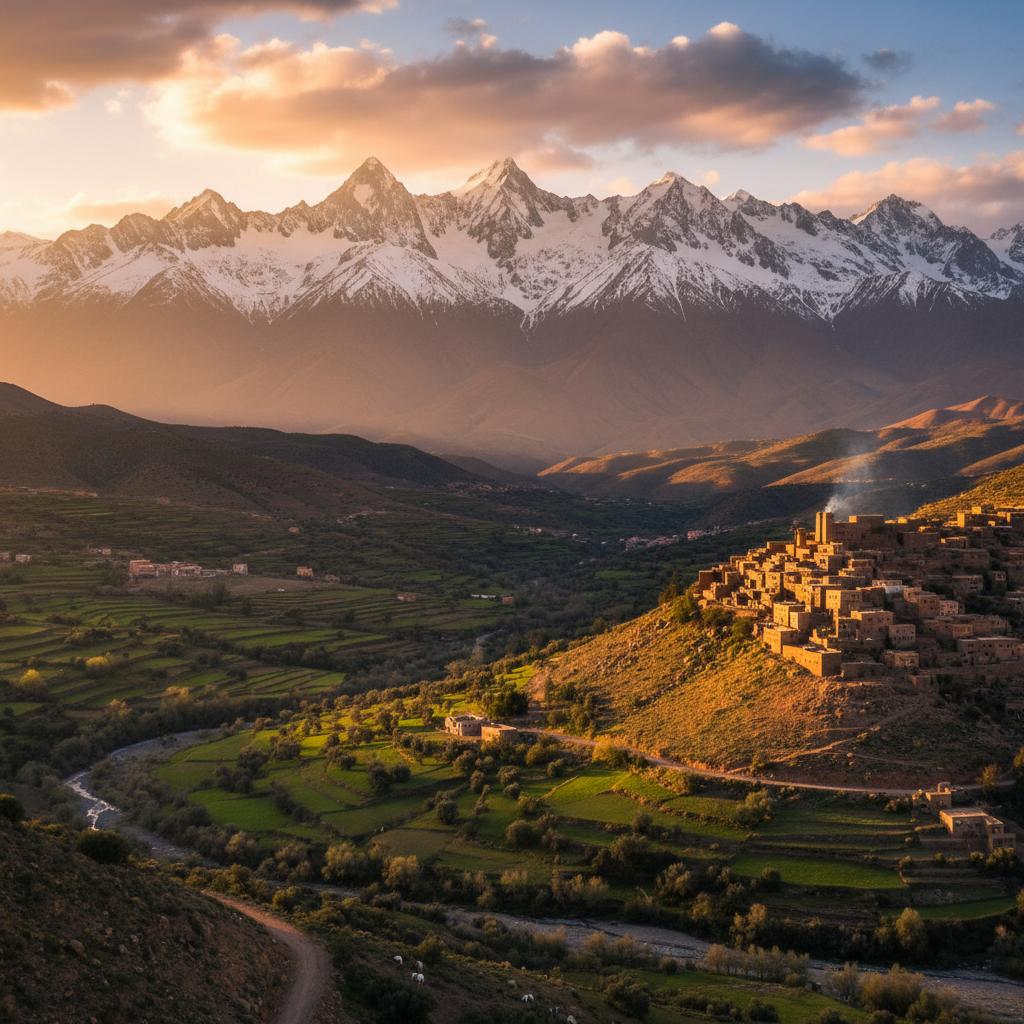
Planning a Moroccan expedition inevitably leads to a pivotal transportation crossroad: Should you rent a car and drive yourself, or hire a licensed private driver with a 4x4 or Mercedes minivan?
Search online travel forums and you will find wildly polarized opinions. Some intrepid road-trippers boast about the scenic freedom of driving through the Anti-Atlas, while others recount harrowing ordeals navigating hair-raising 2,260-meter mountain passes behind smoking phosphate trucks, paying on-the-spot police fines in rural villages, or losing €1,800 security deposits over minor undercarriage stone chips.
At Roam Morocco, our local team operates private custom tours across every corner of the Kingdom, while also advising independent travelers on realistic logistics. In this comprehensive 2026 guide, we break down the unfiltered financial reality, the safety hazards of Moroccan roads, the hidden fees rental agencies rarely disclose, and provide a clear framework so you can make the safest and most cost-effective choice for your trip.
Renting a Car
- Flexibility: High on quiet highways; low inside ancient medinas
- Road Stress: High on mountain passes, roundabouts & rural night driving
- Liability: Full financial risk (€1,500 to €2,500 credit card hold)
- Navigation: Requires constant GPS attention, offline maps & data
- Parking: Must negotiate with street parking guardians daily
- Best For: Budget duos, coastal surf trips & tollway transit
Hiring a Private Driver
- Flexibility: Unrestricted photo stops, hidden panoramic viewpoints
- Road Stress: Zero. Relax, nap, take photos & enjoy mountain scenery
- Liability: Zero. Licensed Transport Touristique full insurance
- Navigation: Expert native Berber driver handles all routes & weather
- Parking & Bags: Doorstep riad curbside delivery & luggage porterage
- Best For: Sahara Desert, Atlas Mountains, families & luxury trips
1. The Real Cost Comparison: Hidden Fees Exposed
On international booking portals like DiscoverCars, you will see compact rental cars advertised in Marrakech or Casablanca for as little as €25 to €35 ($27 to $38 USD) per day. However, treating that headline number as your final transportation expense is one of the most common budget errors travelers make.
Driving through Morocco involves significant daily operating overheads that car rental companies keep in the fine print. Let us look at the true itemized breakdown of a 7-day road trip:
| Cost Component | Self-Drive Car Rental (Economy/Compact) | Roam Morocco Private Chauffeur (SUV 4x4 / Van) |
|---|---|---|
| Base Daily Rate | €28 – €50 / day | €130 – €220 / day (flat transparent rate) |
| Full Comprehensive Insurance (Zero Deductible) | €16 – €26 / day (Essential in Morocco to protect against gravel chips) | Included (Official passenger commercial coverage) |
| Fuel (Gasoil / Diesel @ ~14.50 MAD/L) | €25 – €40 / day (Distances between cities & desert are vast) | Included (All vehicle fuel covered) |
| Highway Tolls (Autoroutes du Maroc) | €5 – €12 / day | Included |
| Parking Guardians ("Gardiens de Voitures") | €2 – €5 / day (10 to 30 MAD per parking encounter) | Included (Driver handles vehicle security) |
| Credit Card Security Deposit Hold | €1,500 – €2,500 frozen on credit card during trip | €0 hold (Zero security deposit needed) |
| Speed Radar Fines Contingency | €15 – €40 per infraction (Paid immediately in cash to Gendarmerie) | €0 (Driver responsibility) |
| Driver Accommodation & Meals | N/A | Included in daily package |
| Realistic Total Per Day | €76 – €133 / day | €130 – €220 / day |
The "Per-Person" Financial Math
Notice the arithmetic when traveling as a party of two or more:
- For a Solo Traveler: Renting a car is substantially cheaper (€85/day vs €160/day), assuming you are willing to shoulder the navigation stress and liability.
- For a Couple: A rental car costs roughly €45 per person per day. A private driver costs roughly €75 per person per day. The difference is approximately €30 per person per day—the price of a modest dinner—in exchange for eliminating all driving fatigue, liability, and parking scrambles.
- For a Family or Group of 4: A larger rental vehicle (SUV or 7-seater minivan) runs €110–€150/day with insurance and fuel. A private Mercedes van or Toyota Prado from Roam Morocco runs €180–€220/day. The difference drops to just €15 to €20 per person per day.
2. Safety & Road Realities: What You Must Know Before Driving
Morocco has poured billions of Dirhams into modernizing its national highway infrastructure over the past decade. The toll motorways (Autoroutes) connecting Tangier, Rabat, Casablanca, Marrakech, and Agadir are superb—four-lane divided expressways that rival French autoroutes.
However, most tourists do not come to Morocco to drive between Casablanca and Rabat. They come to explore the High Atlas Mountains, the ancient fortified kasbahs of Ouarzazate, the dramatic Dadès and Todra Gorges, and the rolling golden dunes of Erg Chebbi in Merzouga. And on those routes, the driving environment changes dramatically.
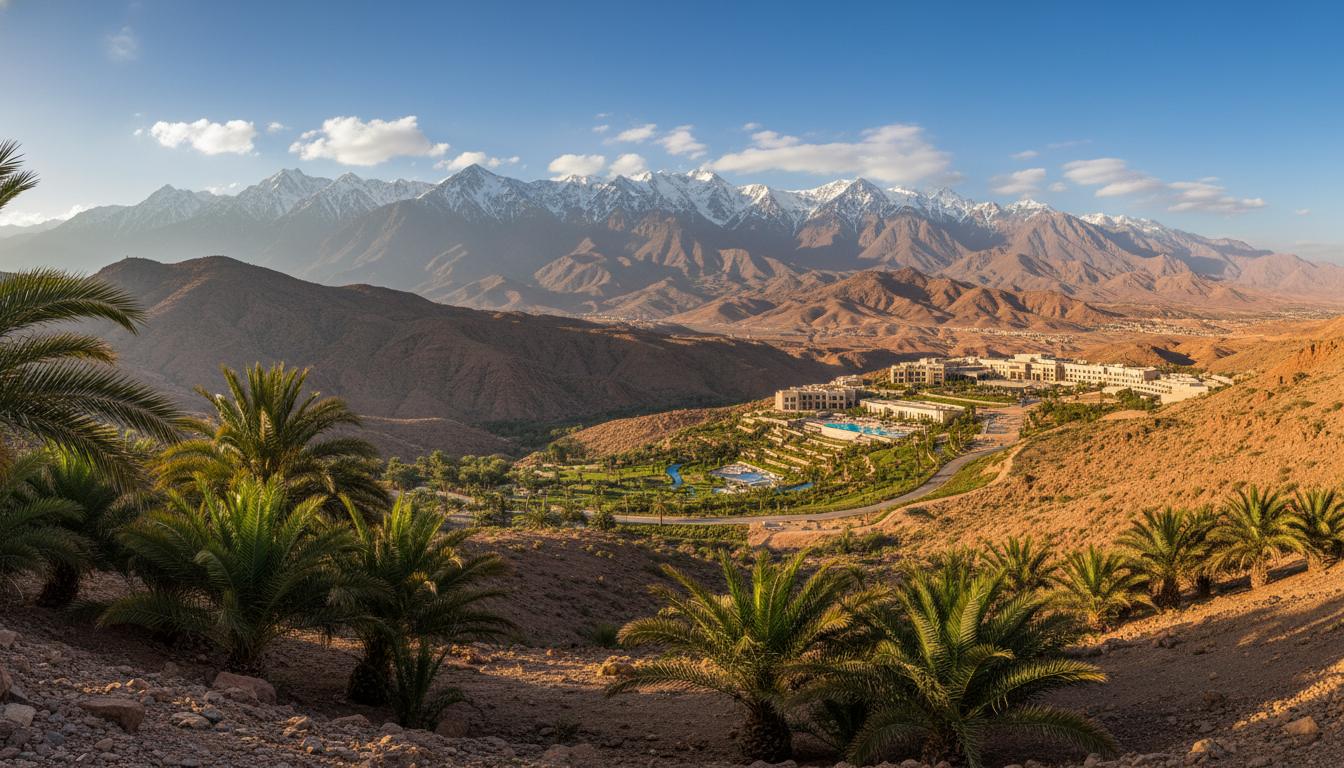
Hazard 1: The Tizi n'Tichka Mountain Pass (Elevation 2,260m)
To reach Ouarzazate, the Dadès Valley, or the Sahara Desert from Marrakech, you must cross the High Atlas Mountains via the famous N9 road over the Tizi n'Tichka pass.
While major widening projects have improved sections of the road, Tichka remains an intensely demanding alpine route:
- Overwhelming Switchbacks: Continuous hairpin turns with sheer vertical drops on the unbarricaded outer edge.
- Heavy Commercial Freight: Massive phosphate and quarry semi-trucks crawl uphill at 15 km/h, spewing black exhaust. Passing them requires squeezing onto narrow shoulders or timing overtakes around blind mountain bends.
- Unpredictable Weather: Between November and April, Tizi n'Tichka regularly experiences dense mountain fog, torrential downpours, black ice, and sudden snowstorms that temporarily close the pass.
- Rockfall Hazards: Heavy rain can dislodge boulders from steep mountain cuttings onto the asphalt.
When you hire a local Berber driver, they drive this mountain pass dozens of times each season. They know every blind corner, know precisely which gravel shoulders are firm, and know how to maintain vehicle cooling on 35°C summer ascents. When you self-drive, you spend four tense hours gripping the steering wheel, unable to glance at the majestic snowy peaks.
Hazard 2: City Traffic & Roundabout "Priorité à Droite"
Entering Marrakech, Casablanca, or Fes during peak hours is a sensory shock for uninitiated drivers. Lanes are treated as loose suggestions. Mopeds, electric scooters, horse-drawn carriages (calèches), handcarts, stray dogs, and pedestrians in dark djellabas cross eight-lane boulevards simultaneously.
Crucially, Morocco enforces an idiosyncratic French colonial traffic rule: Priorité à droite (Priority to the right). On many older city roundabouts without explicit "Cedez le passage" (Yield) triangle signs, traffic entering the roundabout has the legal right of way over vehicles already inside the circle. Hesitating or slamming on brakes inside a multi-lane Marrakech roundabout is a prime cause of tourist fender-benders.
Hazard 3: The Strict Gendarmerie Royale Radar Net
Morocco is one of the most heavily policed driving environments in North Africa. Every 25 to 50 kilometers along regional roads, you will encounter a checkpoint manned by the Gendarmerie Royale (rural police) or the Sûreté Nationale (urban police).
- The Mandatory Stop: Checkpoints are marked by signs reading "Halte Police" or "Halte Gendarmerie". You must come to a complete, dead stop at the sign. Do not roll through. You must wait patiently until the officer makes eye contact and waves you forward with a hand gesture. Rolling through without permission can result in an immediate 400 MAD fine.
- Laser Speed Guns: Police officers frequently conceal laser radar speed guns behind date palms, olive groves, or bridge abutments, right at the point where speed limits abruptly drop from 100 km/h to 60 km/h on village approaches.
- On-the-Spot Fines: If caught exceeding the limit by even 7 km/h, you will be pulled over and issued a fine ranging from 150 to 300 MAD (approx. €15 to €30), which must be paid immediately in cash in exchange for an official paper receipt. While not financially catastrophic, multiple stops and language barriers can sour your holiday mood.
Hazard 4: Night Driving Risks
Nearly every Western embassy in Rabat issues the same advisory: Avoid driving after dark on unlit rural Moroccan roads.
Rural roads lack streetlights, reflective cat-eyes, and painted lane dividers. After sunset, you will encounter pedestrians walking alongside the road dressed in dark djellabas, bicycles with zero reflectors, unlit tractors hauling hay bales, and wandering donkeys or camels that blend seamlessly into the night asphalt. Professional private drivers schedule long journeys to conclude before dusk precisely for this reason.
Prefer to Soak in the Panorama Without Road Anxiety?
Let Roam Morocco handle the wheel. Our licensed, English-speaking chauffeurs drive modern Toyota Prado 4x4s and Mercedes vans with 24/7 Marrakech concierge support, doorstep riad pickup, and all-inclusive pricing.
3. The Medina Parking & Baggage Conundrum
One critical operational reality that self-drivers overlook is that Morocco's famous riads are located deep inside centuries-old medinas where cars cannot physically enter.
If you rent a car and drive to Marrakech or Fes, the following sequence occurs:
- You arrive at the outer medina wall, navigating bumper-to-bumper scooter traffic while trying to decipher street signs.
- You must search for a public or private parking lot (often a dusty gravel enclosure).
- You will be met by a "Gardien de Voiture"—a parking attendant wearing a reflective yellow vest who manages spaces. You must negotiate an overnight rate (typically 20 to 50 MAD per night) and often leave your car keys behind so they can shuffle vehicles like a sliding puzzle.
- You must unload all your luggage onto the cobblestones, find a cart porter (koussa), negotiate their fee (20–40 MAD), and walk 15 to 25 minutes through confusing labyrinthine alleys to locate your riad door.
- On departure day, you must repeat the entire exercise in reverse.
In contrast, when you hire a Roam Morocco private driver:
- Your driver drives directly to the nearest authorized drop-off gate.
- Your driver contacts your riad manager in advance via WhatsApp, ensuring riad staff are waiting curbside with baggage carts to escort you directly to reception.
- Your driver takes the vehicle away to secure private parking at no extra cost to you.
- You never worry about your car being scratched, blocked in, or broken into while you relax in a rooftop pool.
4. The Hidden Cultural Value of a Local Berber Driver
Perhaps the greatest distinction between renting a car and hiring a chauffeur is not measured in Euros or Dirhams—it is measured in the depth of your Moroccan experience.
A licensed private driver in Morocco is far more than a person behind the steering wheel. They are your cultural ambassador, translator, and local protector.
Language & Translation
Fluent in English, French, Moroccan Arabic (Darija), and Tashelhit Berber, your driver bridges every communication gap at roadside markets, police stops, and rural hamlets.
Secret Viewpoints
Stop at authentic mountain bakeries, pristine gorge lookouts, and ancient ruined granaries that appear on no Google Maps or tourist guidebooks.
Haggling & Scam Shield
Prevent aggressive street touts, faux guides, and roadside tourist traps. Your driver ensures fair local pricing on argan oil, fossil crafts, and fresh meals.
Spontaneous Tea Stops
Share mint tea with local families, hear firsthand stories of nomadic desert life, and discover Morocco's soul through genuine human connection.
5. The 60-Second Decision Tree: Which Option Fits You?
Still unsure which route to take? Answer these five quick questions to determine your ideal transportation mode:
| Your Travel Scenario | Recommended Choice | Why |
|---|---|---|
| Route: Imperial Cities only (Casablanca, Rabat, Tangier) | Al Boraq High-Speed Train | Morocco's bullet train runs at 320 km/h between Tangier and Casablanca. It is faster, cheaper, and more comfortable than either driving or a chauffeur. |
| Route: Atlantic Coast & Surf Trip (Taghazout, Essaouira, Imsouane) | Renting a Car | Flat coastal roads, easy navigation, and freedom to chase surf breaks with surfboards strapped to the roof. |
| Route: Sahara Desert Expedition (Marrakech → Dades → Merzouga → Fes) | Private Driver (Strongly Advised) | Involves 1,100+ km of mountain switchbacks, desert tracks, and 8-hour driving days. Fatigue is extreme; local driver knowledge is invaluable. |
| Group: Family with young children or elderly travelers | Private Driver | Doorstep riad service, zero luggage dragging, spacious air-conditioned vehicle, flexible bathroom/snack stops without stress. |
| Traveler Profile: First-time visitor to North Africa / Arab world | Private Driver | Eliminates cultural disorientation, language friction at checkpoints, and aggressive city parking touts. |
6. If You Decide to Rent a Car: 7 Essential Rules for Survival
If you have weighed the trade-offs and decided that self-driving matches your travel style, adhere strictly to these seven expert rules:
- Book via a Reputable Aggregator with Full Excess Coverage: We recommend DiscoverCars because their Full Coverage policy refunds your deductible in the event of minor scratches or windshield cracks, which local kiosks often exploit.
- Take a Full 4K Walkaround Video at Pickup: Before leaving the airport parking bay, film a continuous slow video of every body panel, wheel rim, tire sidewall, headlights, and windshield. Zoom in on existing stone chips and ensure the agent notes every single scratch on the signed inspection sheet.
- Never Drive at Night: Plan all road trips so that you arrive at your riad or hotel at least 45 minutes before sunset.
- Install an Airalo eSIM for Instant GPS: Do not rely on rental agency GPS units (which are often outdated). Install an affordable Morocco eSIM from Airalo before boarding your flight, and download offline maps for the entire country on Google Maps or Maps.me.
- Always Come to a Full Stop at Checkpoints: When you see "Halte Police" or "Halte Gendarmerie", stop completely at the sign and wait for the wave.
- Keep Dirham Cash in Small Denominations: Carry 10, 20, and 50 MAD notes at all times for parking guardians (gardiens de voitures), highway toll booths, and potential radar fines.
- Check the Spare Tire & Jack: Mountain potholes and unpaved shoulder gravel cause frequent punctures. Verify that the spare tire is properly inflated and the jack and lug wrench are present in the trunk before driving away.
7. If You Decide to Hire a Private Driver: How to Book Safely
If you opt for the safety, luxury, and cultural richness of a private driver, make sure you avoid unlicensed operators:
- Verify "Transport Touristique" License Plates: In Morocco, official tourist transport vehicles bear dedicated blue or metallic registration plates indicating commercial passenger authorization. Unlicensed drivers operating personal civilian cars risk vehicle impoundment at police checkpoints, leaving passengers stranded on the highway.
- Insist on Transparent All-Inclusive Quotes: Ensure in writing that your daily quote includes the vehicle, English-speaking chauffeur, fuel, highway tolls, parking fees, and the driver's overnight hotel room and meals.
- Look for High-End Fleet Maintenance: Ensure your tour operator uses modern Toyota Land Cruiser Prado 4x4s or Mercedes Vito/V-Class vans with functioning dual air conditioning, pristine tires, and onboard Wi-Fi.
At Roam Morocco, all our drivers are fully licensed, vetted, and fluent in English. We operate a fleet of immaculate vehicles and offer transparent, zero-surprise pricing. You can explore our signature routes or design an entirely bespoke journey:
- 3-Day Premium Explorer Circuit (Marrakech → Dades → Merzouga Dunes)
- Heritage & Cinema Circuit (Ait Benhaddou & Ouarzazate Kasbahs)
- Active High Atlas & Toubkal Trekking Circuit
- Complete 2026 Morocco Private Driver Cost Breakdown
Ready to Experience Morocco in Complete Comfort?
Skip the mountain stress, parking headaches, and rental car deposit holds. Let our local team craft your tailored private tour with licensed English-speaking drivers, handpicked riads, and 24/7 Marrakech concierge support.